


Siam's Smile: The 1972 Thai Sativa Dutch Passion Brought Home
Every other variety in this catalogue can be bought somewhere else. Siam’s Smile cannot. It has no page on dutch-passion.com and no distributor outside this country, because it was bred for one market and released into it — the market its great-grandparents were collected from, fifty years earlier.
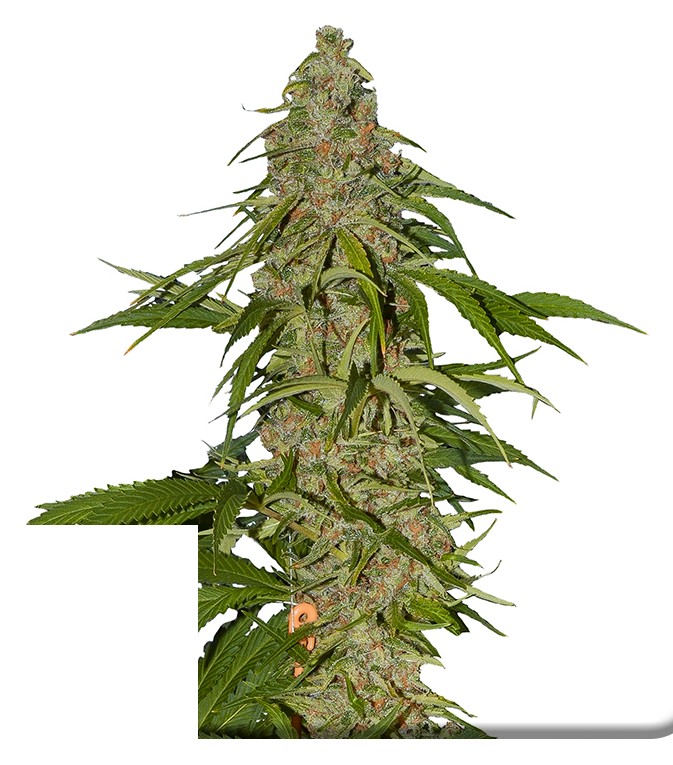
This is the story of how that happened, and, more usefully, what it means if you are the person actually putting the seed in soil.
A freezer in the Netherlands
Dutch Passion exists because Henk van Dalen spent the 1970s hitchhiking east from Amsterdam with a biologist’s habit of collecting things. Turkey, Iran, Afghanistan, Pakistan, India, Nepal, Myanmar, Laos, Thailand, Cambodia, Vietnam — and seeds from all of them, brought back and frozen.
That freezer is the reason the company later had something to breed from. Feminised seed technology is what Dutch Passion is best known for commercially, but the genetic library is the asset that made the rest possible, and much of it consists of landraces that no longer exist in the wild in the form they were collected.
Thailand held van Dalen’s attention longer than most. He spent months in the north, living among hill tribes, learning how cannabis was used ritually and medicinally and trading cultivation knowledge in both directions.
Thirty-three seeds
When Thailand decriminalised cannabis in 2022, the breeding team went back into the library looking for genuine Southeast Asian material to mark it with. They found a sealed pack labelled Thai Jungle Sativa 1972.
Fifty-year-old seed does not germinate well. Of thirty-three, seven came up. One of those seven was selected as the mother.
The team then made a decision worth being honest about: they crossed it with Chocolate Thai, to lift yield and sweetness. A pure 1972 landrace would have been a better story and a worse product — Southeast Asian landrace sativas are famously long-flowering, famously lanky, and famously light-yielding by modern commercial standards. The brief was to keep as much of the original as possible while producing something a grower would actually plant twice.
That compromise is visible in the specification, and it is the single most important thing to understand about this seed.
What you are actually buying
| Siam’s Smile | |
|---|---|
| Type | Sativa (near-pure) |
| Lineage | 1972 Thai Jungle Sativa × Chocolate Thai |
| Flowering | About 9 weeks |
| Yield | XXL |
| THC | Very high |
| Family | Classics |
| Seed format | Feminised, photoperiod |
Nine weeks is the number to stare at. Pure Thai landrace sativas commonly run fourteen to sixteen weeks in flower, which is why almost nobody grows them commercially and why the old Thai stick trade worked on a completely different calendar from a modern grow room. Siam’s Smile finishes in nine. That is a modern flowering time attached to landrace ancestry, and it is what the Chocolate Thai cross and the selection work bought.
XXL yield on a near-pure sativa is the other unusual entry in that table. Sativas of this heritage normally trade yield for structure.
The terpene profile
Dutch Passion publish a measured cannabinoid and terpene breakdown for this variety, and it is worth reading rather than skimming, because it explains the smell.
| Terpene | Share |
|---|---|
| Beta-myrcene | 32.9% |
| Beta-caryophyllene | 28.5% |
| Linalool | 19.7% |
| Humulene | 8.2% |
| Alpha-pinene | 2.9% |
Alongside the THC, the minor cannabinoids come in at CBG 0.33%, CBC 0.21%, CBN 0.11% and CBD 0.10% — a THC-dominant chemotype with no meaningful CBD, as you would expect.
Two things stand out. Myrcene and caryophyllene together make up over sixty per cent of the profile, which is a heavy, earthy, peppery signature rather than the sharp citrus of the Orange line — and the linalool at nearly twenty per cent is unusually high, adding a floral note that is rare at that level.
The practical warning is that myrcene is the most volatile of these, and this plant is more myrcene than anything else. Monoterpenes evaporate, and the temperature at which they leave the flower in quantity is not far above a hot Thai afternoon. Harvest at dawn rather than in the afternoon heat, and dry cool and slow — the reasoning is in how intense UV light shapes terpene and cannabinoid profiles and the method is in drying and curing cannabis in high humidity. A myrcene-dominant variety mishandled in the heat loses the majority of what makes it distinctive.
How it behaves in a Thai climate
Here is where I want to be careful, because there is an obvious and slightly lazy claim available — Thai genetics, grown in Thailand, therefore ideal — and it is only about two thirds true.
What genuinely transfers. Airy, elongated sativa flower structure is a real monsoon advantage. Open buds dry between rains; dense buds hold water in the core and rot from the inside. This is the central argument in sativa vs indica bud structure in the tropics, and Siam’s Smile sits firmly on the right side of it. Heat tolerance and high-UV tolerance are similarly plausible as inherited traits, for the straightforward reason that every ancestor that could not handle 35 °C and a UV index of twelve failed to reproduce.
What does not transfer. Fifty years of Dutch breeding happened in between. The plant was selected, stabilised and feminised in a Dutch facility under Dutch conditions, and the Chocolate Thai contribution is not from your province either. Treat “Thai heritage” as a reason to expect good tropical performance, not as a guarantee that the seed is pre-adapted to your specific rooftop.
The photoperiod point applies here as it does to everything else. This is a feminised photoperiod seed, and Thailand’s day length never exceeds about thirteen hours. A photoperiod plant put outdoors here will begin flowering far earlier and far smaller than the same seed would in Europe. That is not a defect in the variety; it is geometry, and it is covered in autoflower vs feminised seeds in Southeast Asia. If you want the XXL yield the catalogue promises, you either grow it indoors on a controlled cycle or you run supplementary light outdoors — see mastering the 12/12 light cycle outdoors in tropical Thailand.
Its listed categories reflect this: feminised, sativa, and indoor.
Who should grow it
- Growers who want the Thai sativa experience without a sixteen-week flower. This is the only realistic route to that in a modern catalogue.
- Outdoor and greenhouse growers in the wet season, on structure grounds, provided the day-length problem is handled.
- Anyone who cares about provenance. The parentage here is documented and the story is checkable, which is not true of most things sold as “Thai” in this region.
Who should not: anyone with a hard height limit and no training plan. Near-pure sativas stretch, and XXL yields do not come from small plants.
Pricing
| Seeds | Price |
|---|---|
| 1 | ฿630 |
| 3 | ฿1,190 |
| 5 | ฿1,790 |
| 10 | ฿3,000 |
The part that is just a nice story
Van Dalen collected those seeds in a country where cannabis was, at the time, on its way to becoming illegal — Thailand criminalised it in 1979, and the material sat frozen in Amsterdam through the entire prohibition. It came back in 2022 as a legal product.
That is a pleasant circle and it has nothing to do with whether the plant grows well. But it is why this variety is sold here and nowhere else, and it is a reasonable thing to feel good about while you wait out the nine weeks.
Questions about ordering or delivery are in our FAQ, or write to us in Thai or English.